
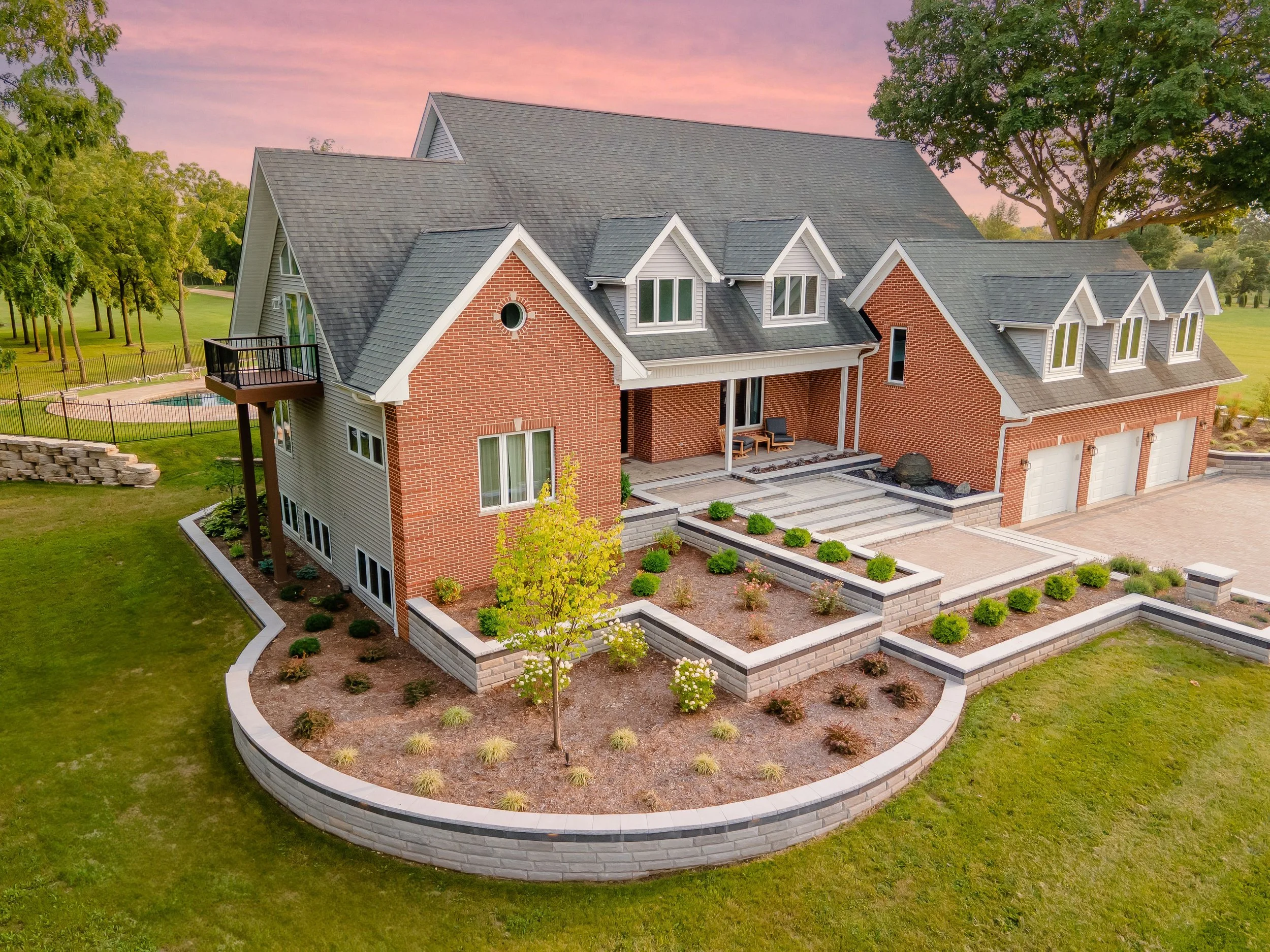
A retaining wall in Hinsdale and Oak Brook, IL, can play a major role in shaping how you use and enjoy your outdoor space. When we guide homeowners through this type of project, we focus on how the retaining wall integrates with the surrounding landscape and the long-term function it needs to provide. As landscape designers, we look at the full picture so the retaining wall supports nearby plantings, walkways, patios, and natural stone features without overwhelming the space.
Related: Enhance Outdoor Spaces With Retaining Walls and Outdoor Lighting in Geneva, IL
Evaluating the Purpose of Your Retaining Wall
A retaining wall needs a clear intention. We discuss how the retaining wall can solve grade challenges, expand usable space, or create separation between different areas. Understanding what you want the retaining wall to achieve helps us plan the structural elements and the hard surface features that complement it. Every retaining wall must work with the surrounding landscape, including planting beds, hard surface transitions, and nearby patios.
When you consider a retaining wall, think about what it supports. A retaining wall can hold back soil, divide activity areas, frame a patio, or help define walkways. We look at how the retaining wall aligns with the way you use the outdoor space throughout the year. Once we identify the key purpose, we tailor the retaining wall design to match the overall layout of your front or backyard.
Choosing the Right Materials for Your Retaining Wall
A retaining wall benefits from durable materials that visually connect to nearby features. Natural stone blends well with plantings, walkways, and patios, and it helps the retaining wall feel grounded in the landscape. Pavers can create a more uniform look, especially when the retaining wall sits near hard surface features like an outdoor kitchen or seating area. We evaluate material choices based on how they pair with existing structural elements and how the retaining wall fits into the environment.
While selecting materials, we also think about scale. A taller retaining wall often calls for natural stone that adds variation, while a low retaining wall near plantings or walkways may use pavers for a cleaner outline. The retaining wall becomes part of the overall composition of your outdoor space, so material selection plays a major role in its effectiveness.
Planning for Proper Drainage Behind the Retaining Wall
Managing water movement is critical for a retaining wall, especially when we work with different elevations in the landscape. When we design a retaining wall, we plan drainage measures that work with the land’s natural flow. Good drainage protects the retaining wall from pressure buildup, and it improves the long-term strength of the structure.
We look at site-specific factors to determine how water behaves around the retaining wall. Soil type, slope, and hard surface features like patios and walkways influence how we handle drainage. This step ensures the retaining wall stays structurally sound and continues to support the surrounding landscape without issues.
Considering the Overall Layout of Your Outdoor Space
A retaining wall influences how people move through an outdoor area. During the design process, we think about how the retaining wall shapes traffic flow from walkways to patios and from one activity area to the next. The retaining wall also interacts with plantings, so we consider how shrubs, perennials, and small trees can soften edges or fill the area around the retaining wall.
When planning a retaining wall, we look at the broader environment and how the retaining wall complements existing structural elements. A retaining wall near an outdoor fireplace or seating space becomes part of the atmosphere, while a retaining wall installed near an inground pool or planting beds may play more of a supportive role. We assess all these relationships to ensure the retaining wall blends naturally with the landscape.
Understanding Height, Structure, and Construction Needs
A retaining wall requires careful planning before construction begins. Height plays a major role in determining how the retaining wall will function and what engineering considerations we need to account for. We evaluate whether the retaining wall will serve as a low boundary feature or a large structural anchor for the landscape. The slope, soil conditions, and expected load all guide how we construct the retaining wall.
When we design and build a retaining wall, we consider reinforcement, excavation, and how the retaining wall supports nearby elements. A retaining wall built next to a patio, outdoor kitchen, or walkway responds differently to pressure and weight compared to one supporting a slope with plantings. These details help us create a plan that ensures the retaining wall performs consistently and works with the surrounding space.
Enhancing the Area Around the Retaining Wall
Plantings play a major role in how a retaining wall looks once construction finishes. We often install shrubs, perennials, and ornamental trees to give the retaining wall a natural appearance and weave it into the environment. Blooms can soften edges, provide seasonal interest, and help blend the retaining wall with outdoor living features like patios or seating areas. We also look at lighting installation to improve visibility along walkways or near activity areas.
A retaining wall becomes more than a structural feature when the surrounding elements support it. We look at how natural stone accents, paver patios, and adjacent walkways interact with the retaining wall. These choices help unify the entire landscape and create a functional, welcoming atmosphere.
Related: Landscape Design in Geneva & St. Charles, IL: Creating Outdoor Spaces That Fit Your Life