
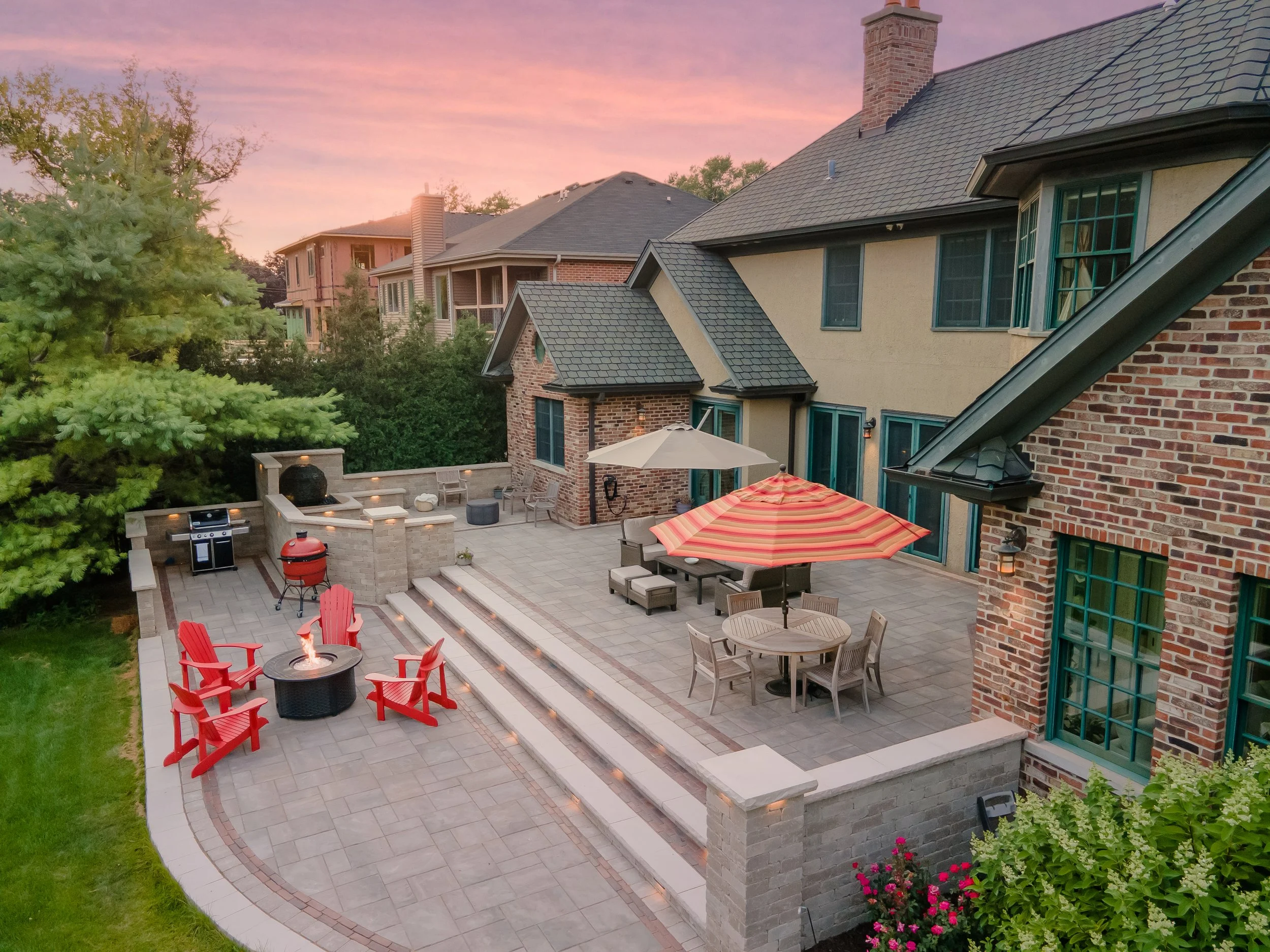
The yard drops three feet between the patio and the fence line. That slope has been untouched since the house was built because nothing useful can go on it. The lawn mower slides. The kids avoid it. The rain channels through it and erodes the edge of the patio. And every time the homeowner looks at it, the thought is the same: that space should be doing something.
A retaining wall turns that thought into a plan. It holds the grade at a defined height, creates a level surface where there was none, and gives the property back square footage that the slope has been holding hostage. In Northern Illinois, where the clay soils compound the drainage challenges and the freeze thaw cycle stresses every structure in the ground, the retaining wall also needs to be engineered for conditions that are harder on walls than most regions.
Related: Enhance Outdoor Spaces With Retaining Walls and Outdoor Lighting in Geneva, IL
What the Wall Has to Do in This Climate
The visible face of a retaining wall is the aesthetic. Everything behind and beneath it is the engineering. In McHenry County and the surrounding communities, the engineering has to account for conditions that destroy walls built on shortcuts.
A retaining wall in this region needs:
A base course buried below grade, set on compacted aggregate, that anchors the wall against forward movement from soil pressure and frost heave
Drainage aggregate and a perforated pipe behind the wall that remove water before it builds hydrostatic pressure against the back face
Backfill compacted in lifts to prevent settling that creates voids and compromises the drainage
Geogrid reinforcement on walls above three to four feet, tying the wall structure into the retained soil to distribute the lateral load
A cap that locks the top course, finishes the wall visually, and can serve as a seating surface when the height and location allow
These components are invisible. They are also the difference between a wall that lasts twenty years and one that tilts in three.
Related: What to Consider Before Adding a Retaining Wall in Hinsdale and Oak Brook, IL
How the Wall Changes What the Yard Can Be
The functional purpose is structural. The design purpose is transformative. A retaining wall does not just hold soil. It creates the opportunity for features that a sloped grade cannot support.
A single wall across a slope can produce a level patio area, a fire feature zone, or a planting bed with improved drainage. A series of walls can terrace the entire grade into distinct outdoor rooms, each at a different elevation, connected by steps or walkways that give the backyard a layered, intentional character.
The material, whether natural stone, manufactured block, or a combination, sets the tone. The proportions determine whether the wall feels like a design element or a corrective measure. And the integration with the surrounding hardscape, plantings, and lighting determines whether the wall belongs to the landscape or sits apart from it.
The Grade That Becomes the Feature
The best retaining wall projects do not hide the slope. They use it. The wall creates the elevation change that makes the backyard interesting, the terraces that give the outdoor space depth, and the structure that makes the landscape feel designed rather than inherited. If the grade on your property has been limiting what the backyard can become, a conversation about what a retaining wall could create there is a good place to start.